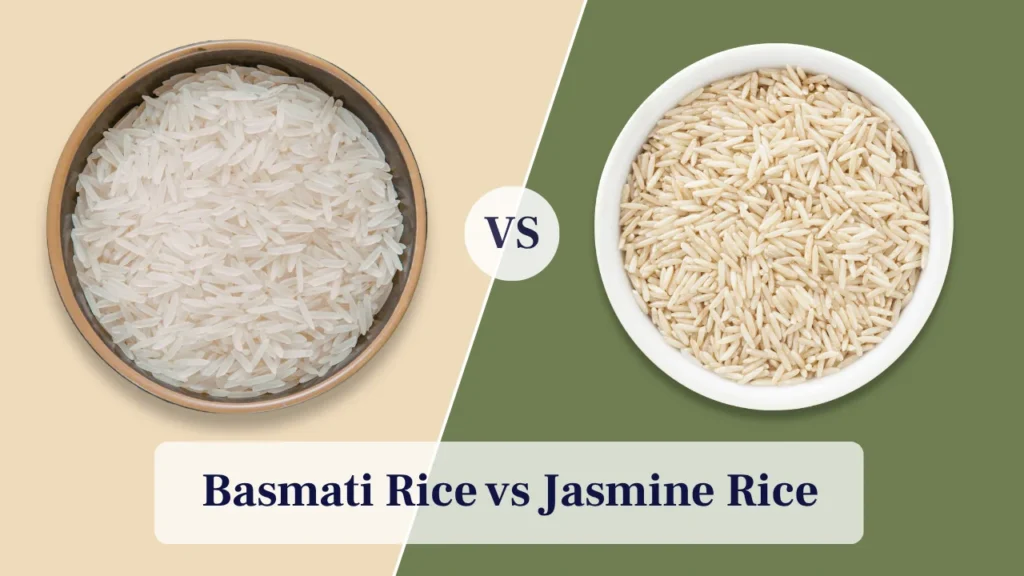
Basmati rice vs jasmine rice is a common question in the kitchen, and the confusion makes sense. Both are long-grain, both are aromatic, and both are popular across Asia and beyond.
Look closer, though, and the two differ in grain shape, texture, cooking method, and nutrition. These differences decide how the rice turns out on your plate. By the end of this guide, you will know which rice suits which dish and when to choose one over the other.
Basmati vs Jasmine Rice at a Glance
Here is the basmati rice vs jasmine rice comparison side by side. The table sums up the main difference between basmati and jasmine rice.
| Feature | Basmati | Jasmine |
|---|---|---|
| Origin | Indian subcontinent | Thailand and Southeast Asia |
| Grain shape | Long and slender | Long but slightly plumper |
| Length after cooking | Long and slender | Changes very little |
| Aroma | Nutty, popcorn-like | Floral, pandan-like |
| Texture | Dry, fluffy, separate grains | Soft, moist, slightly sticky |
| Soaking | 20 to 30 minutes | Not needed |
| Water ratio (rice:water) | About 1:1.5 to 1:2 | About 1:1.25 |
Origin and Grain
Is basmati rice the same as jasmine rice? No, and the differences start long before cooking. Basmati grown in certain areas near the Himalayas has a GI (Geographical Indication) tag, which protects its name. Here, GI does not mean glycemic index. Jasmine rice is named after the jasmine flower. Its best grade, Thai Hom Mali, grows in northeastern Thailand, and some of it has a GI tag. Basmati is often aged, which helps it cook better. Jasmine tastes best fresh, as its smell fades within months.
Aroma, Flavour and Texture
When you compare basmati vs jasmine rice cooked side by side, the taste and feel are clearly different. Both get their smell from the same natural compound, called 2-AP (2-acetyl-1-pyrroline). The amount of it differs between the two. Basmati has a light, mild taste that lets spices stand out. Jasmine tastes slightly sweet and buttery. The texture comes down to starch. Basmati has more amylose, a starch that keeps grains firm. Jasmine has more amylopectin, a starch that makes grains cling together. This also affects how each one is cooked.
Cooking Differences
That is why jasmine rice vs basmati rice needs different handling in the pot. Rinse basmati two or three times until the water runs clear. One or two rinses are enough for jasmine. Basmati is cooked in measured water or boiled like pasta and drained. Jasmine is usually steamed or made in a rice cooker. Rest both, covered, for 5 to 10 minutes.
Using jasmine in a basmati recipe? Skip the soak and use less water. For the reverse, soak the basmati and add a little more water.
Nutrition and Glycemic Index
In basic nutrition, the two are very close. A 100 g serving of either, cooked, gives about 120 to 130 calories, 25 to 28 g of carbs, 2 to 3 g of protein, and less than 1 g of fibre.
The bigger difference is the basmati vs jasmine rice glycemic index. GI shows how fast a food raises blood sugar. Studies put basmati at about 50 to 58. Jasmine scores higher, with results from around 70 to over 100. These numbers are not fixed. GI changes with the rice variety, how it is cooked, and the study method.
Which Is Healthier, Basmati or Jasmine Rice?
Basmati has a slight edge. Its lower GI means blood sugar rises more slowly after a meal. This matters for people watching their sugar. That does not make jasmine unhealthy. It is still a good source of energy and fits well in a balanced meal. If you are comparing jasmine rice vs basmati rice for weight loss, portion size matters more than the type. Basmati may keep you full a little longer, but no rice does the job on its own. For more fibre, choose the brown version of either.
When to Use Basmati vs Jasmine Rice
Pick basmati for jeera rice, plain rice with dal, and Middle Eastern dishes like kabsa and mandi. Its grains absorb spices and keep their shape. Pick jasmine for coconut rice, rice porridge, and everyday Thai and Vietnamese meals. It soaks up sauces well. This also explains demand. Basmati is a staple in South Asia and the Middle East, while jasmine leads in Southeast Asia. So, which is better, basmati or jasmine rice? Neither wins outright. The basmati rice vs jasmine rice choice depends on the dish you are making.
Final Thoughts
Basmati and jasmine may look alike in the pack, but they behave very differently. Basmati is aged, cooks firm, and has a lower GI. Jasmine is best fresh, cooks soft, and tastes slightly sweet. Both are good choices when eaten in sensible portions as part of a balanced diet. So instead of asking which rice is better, ask what you are cooking tonight. Let the dish decide.
FAQs
Q1: Is basmati rice better than jasmine?
Ans: Neither is better overall. Basmati suits biryani and pulao, where separate grains matter. Jasmine suits Thai curries and stir-fries, where softer rice works well.
Q2: Which tastes better, jasmine or basmati?
Ans: It depends on personal taste. Basmati has a mild, nutty flavor and popcorn-like aroma. Jasmine tastes slightly sweet and buttery, with a floral aroma.
Q3: Which rice is the healthiest, basmati or jasmine?
Ans: Neither is clearly healthier. In white form, their nutrition is similar. Both are naturally gluten-free. Their glycemic index varies by variety, processing and cooking.
Q4: Do Indians eat basmati or jasmine rice?
Ans: Basmati is widely used in Indian cooking, especially for biryani and pulao. Jasmine rice is not commonly used in traditional Indian dishes.