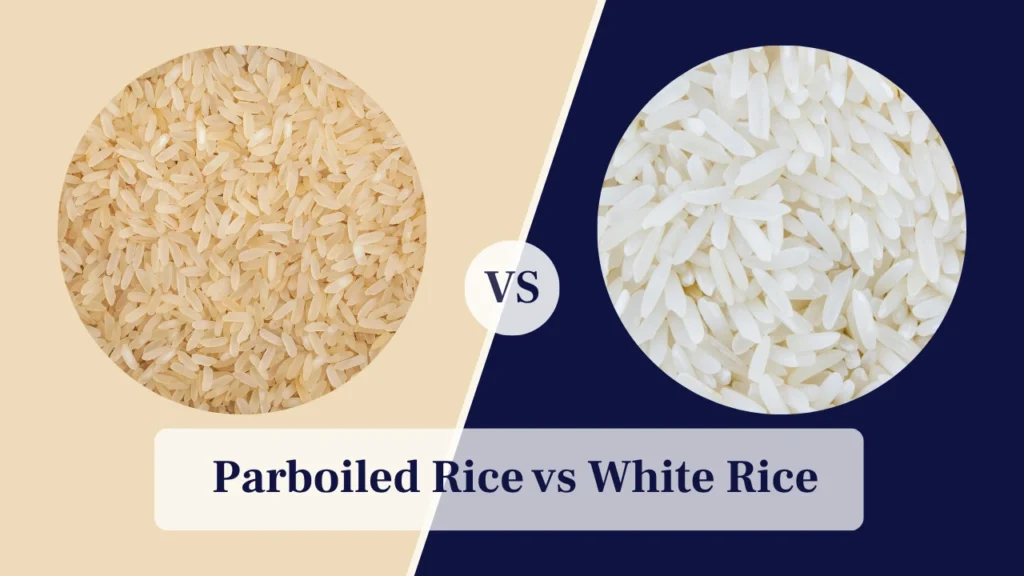
Parboiled rice and white rice often sit side by side on the same shelf, yet they reach it in very different ways. In the parboiled rice vs white rice comparison, the key difference lies in processing. Parboiled rice is soaked, steamed, and dried in its husk before milling, which helps it keep more nutrients. White rice is milled directly from the paddy.
What Is Parboiled Rice?
Parboiled rice is rice that is partially boiled in its husk before milling. That is where the parboiled rice meaning comes from.
It goes through three steps:
- Soak: The paddy is soaked in water.
- Steam: It is steamed, which sets the starch.
- Dry and mill: The grain is dried, then milled.
Steaming moves some nutrients from the bran into the grain and gives it a golden, translucent look. In India, it is called sella rice or usna chawal, and “boiled rice” in South India. Wondering what is converted rice? It is the same rice under another name. It is not precooked or instant rice, so it still needs full cooking.
What Is White Rice?
White rice is paddy that goes straight to milling without any soaking or steaming. First, the husk is removed. Then the grain is polished to strip away the bran and germ, leaving the starchy inner part. This gives white rice its soft texture and mild, neutral taste. It cooks quickly and blends well with curries, dals, and gravies.
In India, white rice is often called raw rice, arwa chawal, or kachcha chawal. Many people simply call it regular rice. So in a parboiled rice vs regular rice comparison, “regular rice” means plain white rice that has not been steamed. So, is parboiled rice white rice? Not exactly. Some parboiled rice, like white sella, looks almost white after milling. But it goes through steaming first, which makes it a different product.
Difference Between Parboiled Rice and White Rice
Beyond processing, parboiled rice vs white rice also differ in how they cook, taste, and store.
| Feature | Parboiled Rice | White Rice |
|---|---|---|
| Texture after cooking | Firm, separate grains | Soft, slightly sticky |
| Taste | Mild, slightly nutty | Mild and neutral |
| Cooking time | Slightly longer | Shorter |
| Overcooking risk | Low, grains hold their shape | Higher, can turn mushy |
| Reheating | Stays separate and firm | Can clump together |
| Shelf life | Stores longer and resists insects better | Stores well but is more prone to pests |
| Grain strength | Harder grains, fewer breaks during milling | More breakage during milling |
Nutrition Comparison
The processing differences also show up in the nutrition values. Here is how the two compare per 100 g of cooked, unenriched long-grain rice, based on USDA data.
| Nutrient (per 100 g, cooked) | Parboiled Rice | White Rice |
|---|---|---|
| Calories | 123 kcal | 130 kcal |
| Carbohydrates | 26.1 g | 28.2 g |
| CaloriesCarbohydrates | 2.9 g | 2.7 g |
| Fiber | 0.9 g | 0.4 g |
| Thiamine (Vitamin B1) | 0.07 mg | 0.02 mg |
| Niacin (Vitamin B3) | 2.3 mg | 0.4 mg |
The calories in parboiled rice are close to those in white rice, so the real difference lies in the vitamins. Parboiled rice keeps more thiamine and niacin. Values can vary by rice variety and between enriched and unenriched rice.
Is Parboiled Rice Healthier?
The nutrition table points to a clear edge for parboiled rice. So, is parboiled rice healthy? For most everyday diets, yes. Here are the main parboiled rice benefits:
- More B vitamins: Steaming pushes thiamine, niacin, and some minerals from the bran into the grain, so more of them remain after milling.
- Gentler on blood sugar: Parboiled rice usually has a lower glycemic index than regular white rice, though the exact value depends on the variety and cooking method.
- Supports gut health: Parboiling forms resistant starch, which feeds the good bacteria in your gut.
- Lower arsenic levels: Studies show parboiling can reduce inorganic arsenic in rice.
- Keeps you full longer: It digests more slowly, giving steadier energy.
It fits easily into a balanced diet, especially when cooked the right way.
Cooking Tips and Best Uses
Here is how to cook parboiled rice for firm, separate grains. Rinse it, soak for 20 to 30 minutes, and use about 2 to 2.5 cups of water per cup of rice. It takes around 20 to 25 minutes to cook.
Regular white rice is quicker. Rinse it, soak briefly if you like, and use about 1.5 to 2 cups of water per cup. It usually cooks in 15 to 20 minutes. Water and time can vary by variety, so check the pack.
What is parboiled rice used for? Mostly dishes where the grains must stay separate:
- Pulao and fried rice.
- Idli and dosa batter.
- Bulk cooking and catering.
White rice suits khichdi, kheer, and soft everyday meals.
Parboiled basmati rice, sold as golden or white sella, keeps its long grains intact, making it a favorite for biryani and kabsa.
Which Rice Should You Choose?
When it comes to parboiled rice vs white rice, there is no single winner. It depends on what you are cooking and what matters most to you. Choose parboiled rice if you want more retained nutrients, steadier energy, and firm, separate grains. It also stores longer and handles bulk cooking well. Pick white rice if you prefer a soft texture, quicker cooking, and a mild, neutral taste. Many kitchens keep both. Weighing parboiled vs white rice by the dish, not by habit, helps you pick the right one for each meal.
FAQs
Q1: Which is healthier, parboiled rice or white rice?
Ans: Parboiled rice keeps more B vitamins and usually has a lower glycemic index, giving it a nutritional edge over white rice.
Q2: What’s special about parboiled rice?
Ans: It is steamed in its husk before milling. This moves nutrients into the grain and gives firm, separate grains that store longer and resist overcooking.
Q3: Can I cook parboiled rice like normal rice?
Ans: Yes, the method is the same. It just needs a little more water, about 2 to 2.5 cups per cup, and a few extra minutes.
Q4: Is it good to eat parboiled rice every day?
Ans: Yes, it can be part of a daily diet. Like any rice, keep portions balanced and pair it with vegetables, dal, or other protein.
Q5: Is it necessary to rinse parboiled rice?
Ans: Rinsing is recommended. It removes dust and loose starch, helping the grains cook evenly and stay separate. A short soak afterward also helps.
Q6: Can parboiled rice be used for idli?
Ans: Yes. Parboiled rice, often sold as idli rice, is widely used in South India for idli and dosa batter because it gives soft, fluffy results.
Q7: What is the Indian name for parboiled rice?
Ans: In India, parboiled rice is called sella rice or ushna chawal. In South India, it is commonly known as boiled rice.
Q8: Which rice is better, basmati or parboiled?
Ans: They are not opposites. Basmati is a variety, while parboiling is a process. Parboiled basmati, or sella, offers basmati’s length with firmer, separate grains.