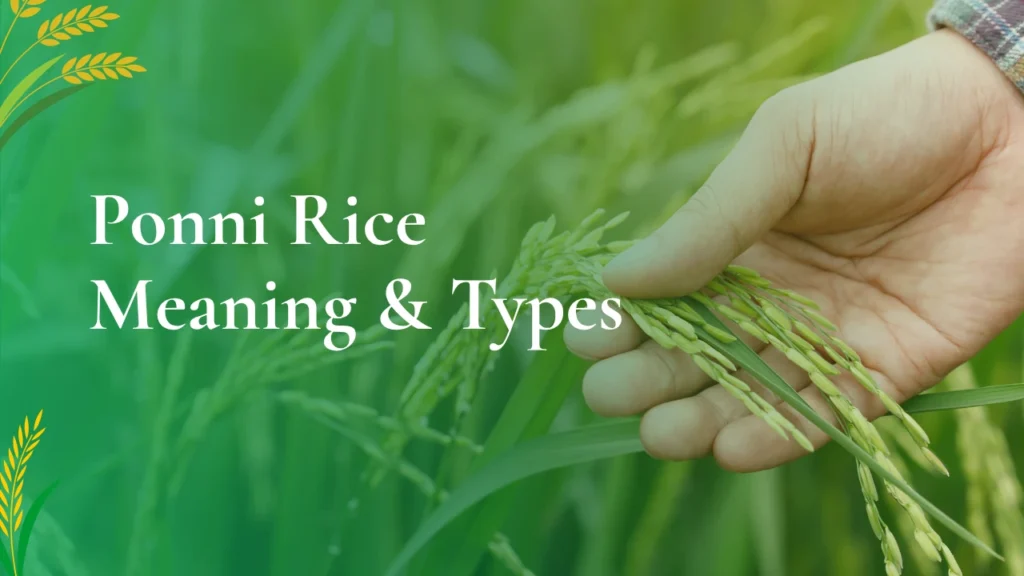
Ponni rice is a medium-grain rice variety grown mostly in South India, especially in Tamil Nadu. If you are searching for what ponni rice is, it is one of the most common rice types used in everyday South Indian meals. It has a soft texture and a mild taste, which makes it a household staple across the region. To understand ponni rice meaning, you need to look at its name and where it comes from.
Ponni Rice Meaning
The word “Ponni” comes from Tamil and means “gold.” This links directly to the ponni rice meaning behind the name, since the rice is associated with the golden color of ripened paddy fields. Ponni is also another name for the Kaveri (Cauvery) river in Tamil Nadu. The rice gets its name from this river because it was first grown along the fertile Kaveri delta. This region includes districts like Thanjavur and Trichy, known for rich soil and good water supply, both important for growing quality rice.
Types of Ponni Rice
Ponni rice mainly comes in two forms based on how it is processed after harvesting.
White Ponni Rice
White ponni rice is the most common form found in stores and markets. During milling, the outer husk and bran layer are removed, leaving behind the white grain. This gives it a soft, fluffy texture once cooked. White ponni rice cooks fairly quickly and works well in daily meals like steamed rice, pulao, and idli batter. Its light texture and mild taste make it a preferred choice in most South Indian households.
Brown Ponni Rice
Brown ponni rice is less processed than the white variety. It keeps its outer bran layer, so the grain looks light brown instead of white. Because the bran stays on, brown ponni rice takes longer to cook and has a firmer, slightly chewy bite compared to white ponni rice.
Ponni Boiled Rice
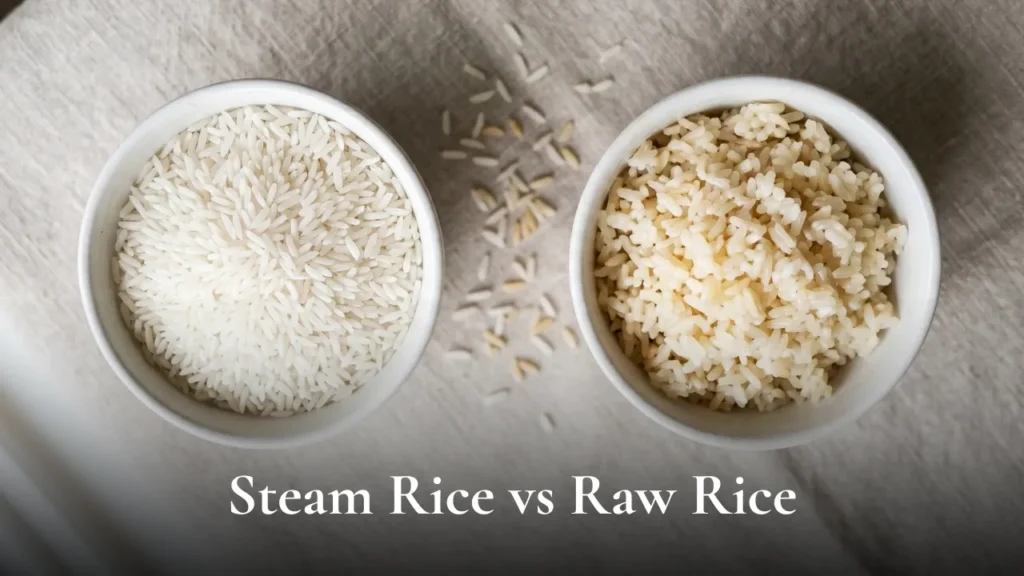
If you are wondering what ponni boiled rice means, it refers to rice that goes through a parboiling process before milling. The paddy is soaked and partially steamed while still in its husk, which helps the grain retain more nutrients and firm up before milling compared to raw milling. Ponni boiled rice has a slightly firmer texture and holds its shape well, even in gravies and curries, making it a preferred choice for meals like sambar rice and other South Indian dishes where the rice needs to stay separate and not turn mushy. Kumud supplies both raw and steam Ponni rice in bulk — check our Ponni Rice specs and pricing.
How Ponni Rice is Made
Ponni rice is grown mainly in the Kaveri delta region of Tamil Nadu, where the soil and water supply support strong paddy growth. Farmers harvest the paddy once it matures and ripens to a golden color. For boiled ponni rice, the harvested paddy is soaked in water and then partially steamed while still in its husk. This parboiling step helps the grain firm up before milling. After parboiling, the paddy goes through milling, where the husk and outer bran are removed. The result is the polished grain that reaches stores, whether as white, brown, or boiled ponni rice.
Key Characteristics of Ponni Rice
- Ponni rice has a few qualities that make it easy to recognize and cook with:
- Medium-grain, non-basmati rice with a soft, mild taste.
- Light in color, with a smooth texture once cooked.
- Ponni rice cooked properly turns out soft and slightly non-sticky, with grains that separate well.
- Absorbs flavors from curries, dals, and gravies without breaking apart easily
- Commonly used in dishes like idli, dosa, biryani, and sambar rice across South Indian households.
Looking to Buy Ponni Rice in Bulk?
Kumud Group supplies export-grade raw, steam and boiled Ponni rice, sourced fresh from the Kaveri delta. Custom packaging (1-50kg) and private label available.
FAQs
Q1: Is Ponni rice good for daily use?
Ans: Yes, Ponni rice is a common choice for daily meals in South India due to its soft texture, mild taste, and quick cooking time.
Q2: What does ‘Ponni’ actually mean in Tamil?
Ans: Ponni means “gold” in Tamil, linked to golden paddy fields and the Kaveri river, where the rice was first cultivated along the fertile delta.
Q3: Which is better for idli — white or boiled Ponni rice?
Ans: White Ponni is more common for idli batter, giving a soft texture. Boiled Ponni also works well and holds shape slightly better.
Q4: Is Ponni rice used for biryani?
Ans: Yes, Ponni rice is used for biryani in South Indian households, as it absorbs flavors well and holds its shape without becoming mushy.