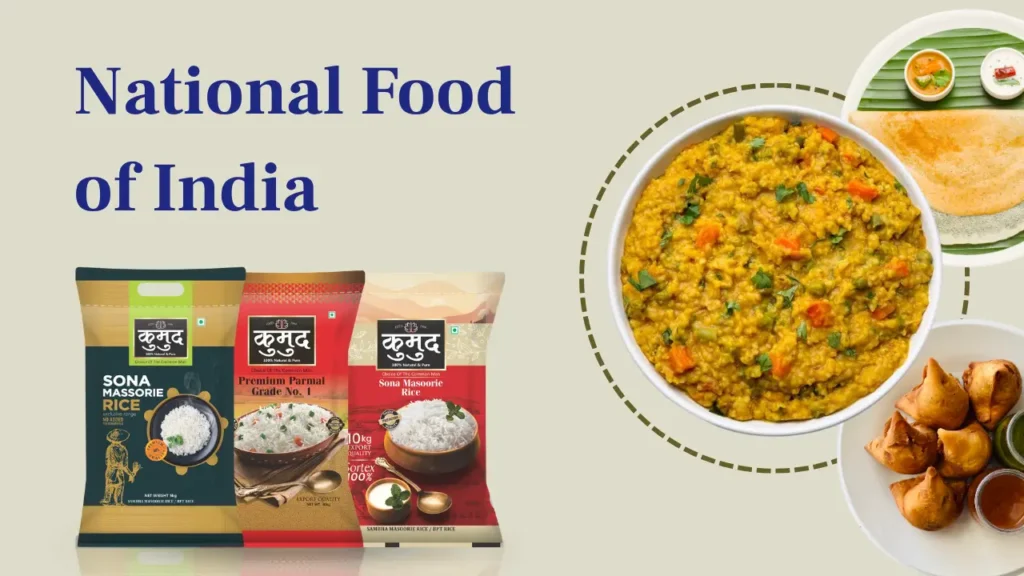
India does not have an officially declared national food. Despite the country’s endless regional cuisines, no single dish has been given legal or governmental recognition as the national food of India. Yet one dish holds this position by public opinion: khichdi. It is widely called the unofficial national food, based more on culture and habit than any official order. This article looks at why khichdi gets this title, what happened around this claim in the past, and how other Indian dishes fit into this picture.
Why Doesn’t India Have an Official National Dish?
India has an official national animal, bird, flower, and fruit. The tiger, peacock, lotus, and mango all carry formal government recognition. Food is different. There is no national food of India listed anywhere in official records. The reason comes down to scale. Indian cuisine changes completely from state to state, sometimes from one district to the next. Rice dominates the south and east, wheat rules the north, and spices, cooking styles, and staple ingredients shift at every border. Picking one dish to represent all of this would leave out most of the country.
The Khichdi “National Dish” Myth: What Actually Happened in 2017
In November 2017, India hosted the World Food India event in New Delhi. As part of it, a team led by chef Sanjeev Kapoor cooked 918 kg of khichdi, which entered the Guinness Book of World Records for the largest quantity of khichdi ever made.The event was branded “Brand India Khichdi,” a marketing push meant to promote khichdi as a symbol of Indian food on a global stage. Reports at the time claimed the government was about to name khichdi as the national dish of India.
Union Minister Harsimrat Kaur Badal denied this soon after. She clarified on social media that no such official declaration was being made and called the claim baseless. The Guinness record was real, but the “national dish” title never received any government approval.
Why Is Khichdi Considered India’s Unofficial National Food?
Khichdi holds this informal title because it fits into every kind of Indian life, rich or poor, urban or rural.
Simple and Affordable
The dish needs only rice, lentils, and a few spices. It costs little to make and requires no special skills, which is why it appears on tables across income groups.
Found in Every Region
Regional versions carry the same idea forward. Bengal has khichuri, Gujarat makes vaghareli khichdi with a drier texture, and South India turns it into pongal with pepper and ghee.
Balanced and Rooted in History
Nutritionally, it combines carbohydrates and protein in one pot, making it easy to digest. The name traces back to the Sanskrit word “khichcha,” and the dish has been part of Indian food for centuries.
Part of Festivals and Rituals
Khichdi also appears during religious fasting, temple offerings, and festivals like Makar Sankranti, which adds to why many see it as the national food of India in practice, if not in law.
Rice at the Heart of Khichdi and Indian Cuisine
Rice is what holds khichdi together. Without it, the dish loses its identity.
Sona Masoori rice is a common choice for khichdi. Its short grains and starchy texture break down slightly during cooking, giving khichdi the soft, one-pot consistency people expect.
This connection goes beyond one dish. Rice has shaped Indian food for thousands of years, forming the base of meals from Punjab to Kerala. Its presence across so many dishes is part of what makes national cuisine in India so varied yet familiar at the same time.
Other Contenders: Biryani, Dosa, Dal, Samosa
Khichdi is not the only dish people associate with India. A few others come close.
Biryani
Biryani is often called the signature dish of India abroad, known for its layered rice, meat or vegetables, and rich spices. Its popularity spans across states, each with its own version.
Dosa
This South Indian crepe made from fermented rice and lentil batter is a breakfast staple, loved for its crisp texture and versatility.
Dal and Samosa
Dal is a daily household basic, while samosa remains a favourite snack nationwide. Both are iconic, but neither carries the same one-pot, all-class appeal that khichdi does.
Conclusion
India may never have one official national food, and that is fitting for a country this diverse. Khichdi comes closest to earning the title through daily habit, not law. It reflects what Indian national cuisine really is: not one dish, but many regions finding common ground in rice, lentils, and shared tradition.
FAQs
Q1: Does India have a national dish?
Ans: India has no officially declared national dish. The government has never given any food legal recognition, despite past claims linking khichdi to the title.
Q2: Which is our national food of India?
Ans: India has no legal national food, but khichdi is widely seen as the unofficial choice, thanks to its simplicity, affordability, and acceptance across every region.
Q3: What is Indian traditional food?
Ans: Indian traditional food includes regional staples like rice, dal, and wheat-based breads, along with dishes such as biryani, dosa, and khichdi shaped by local spices.