Many people find tiny brown bugs in rice while cooking or refilling their rice containers. These bugs are usually rice weevils, a small pest that lives and breeds inside the grain itself. They are common in Indian households, especially during humid months when rice sits in storage for longer periods. If you have spotted these insects and want to know what they are and how to deal with them, this guide covers it in detail.
What is a Rice Weevil?
A rice weevil is a small insect that feeds on stored grains, mainly rice. Its scientific name is Sitophilus oryzae, and it belongs to the beetle family, even though it is commonly called a weevil. This rice insect is found in warm and humid regions, which makes Indian storage conditions favorable for its growth.
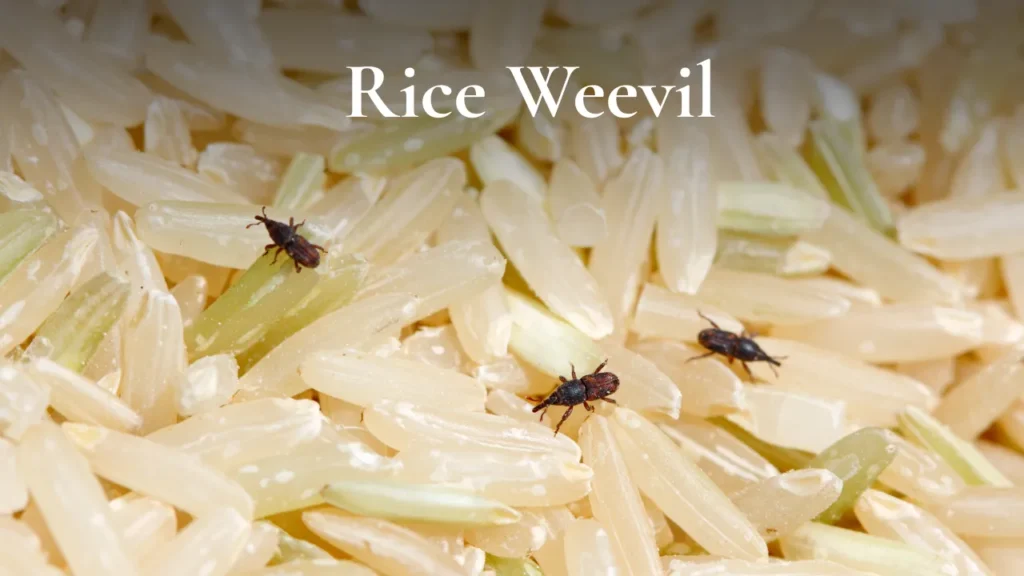
In terms of appearance, a rice weevil is reddish brown to dark brown in color and measures around 2 to 3mm in length. It has a long snout, which it uses to bore into rice grains. Four light spots on its wing covers make it easier to identify. Adult weevils can also fly, which allows them to move between storage containers.
Rice Weevil Life Cycle
The rice weevil life cycle has four stages: egg, larva, pupa, and adult. A female weevil chews a small hole into a rice grain, lays a single egg inside, and seals it with a waxy coating. This makes the egg completely hidden from view.
Once the egg hatches, rice weevil larvae stay inside the grain and feed on it from within. They pass through the pupa stage still inside the same kernel before emerging as fully grown adults. The entire cycle from egg to adult usually takes around four to five weeks, depending on temperature and humidity. Since most of this development happens inside the grain, an infestation often goes unnoticed until adult weevils start appearing on the surface of the rice.
Are Rice Weevils Harmful or Dangerous?
Many people ask are rice weevils harmful, and the simple answer is no. Rice weevils do not bite, sting, or spread any disease. They are not dangerous to human health in a direct way. That said, are rice weevils dangerous to the quality of your rice is a fair question. A heavy infestation can lower grain quality, leaving it hollow, powdery, or unpleasant to look at. If you accidentally eat a few weevils along with rice, it will not cause any harm. The concern with rice weevils is about food quality, not personal health.
White vs Black Insects in Rice
People often get confused between white and black insects in rice, but they are usually different stages of the same pest. White insects in rice are typically rice weevil larvae, small, soft, and legless, found hidden inside the grain kernel where they feed. Black insects, on the other hand, are the adult stage. These are the reddish brown to dark colored weevils that move around on the surface of the rice once they emerge from the grain. Knowing this difference helps you understand that both are part of the same infestation, just at different life stages.
How to Get Rid of Rice Bugs and Prevent Reinfestation
A few simple methods work well without any chemicals. These steps also help you remove insects from rice already sitting in your kitchen.
- Spread the rice under direct sunlight for a few hours, as weevils tend to move away from heat and light.
- Freeze the rice for 4 to 7 days to kill eggs, larvae, and adults at every stage.
- Sieve the rice through a fine strainer to separate weevils and debris from the grain.
- Wash the rice thoroughly before cooking to remove any remaining insects.
For long term rice weevil control and to protect rice from bugs in the future, storage habits matter more than one time fixes. Store rice in airtightcontainers, keep the storage area cool and dry, buy smaller quantities if consumption is low, and use older stock before opening new bags.
Rice Weevil vs Rice Root Weevil
The rice weevil and the rice root weevil are often confused because of their similar names, but they attack rice at completely different stages.
- Rice weevil: A stored grain pest that attacks rice after harvest, while it sits in bags, containers, or warehouses.
- Rice root weevil: A field pest that attacks the roots of the rice plant while it is still growing, long before harvesting begins.
Conclusion
A rice weevil is easy to identify once you know what to look for, and it poses no real threat to your health. The bigger concern is grain quality, which proper storage and quick action can protect. Simple habits like airtight containers and regular stock checks go a long way in keeping your rice weevil free.
FAQs
Q1: Should I throw away my rice if it has bugs?
Ans: Only if the infestation is heavy, with hollow grains and foul smell. For minor cases, clean, sun dry, and wash before cooking.
Q2: Do rice weevils bite humans?
Ans: No, rice weevils do not bite humans. They only feed on stored grains like rice, wheat, and corn, not on humans or animals.
Q3: How to get rid of rice weevil?
Ans: Spread rice in sunlight, freeze it for a few days, sieve out weevils, and wash thoroughly before cooking to remove remaining pests.
Q4: What is the scientific name of the rice weevil?
Ans: The scientific name is Sitophilus oryzae. It belongs to the beetle family Curculionidae, despite being commonly called a weevil.
Q5: Can rice weevil fly?
Ans: Yes, adult rice weevils can fly. This ability helps them spread quickly between storage containers, bags, and different areas of a pantry.
Q6: What attracts weevils?
Ans: Warm, humid conditions attract weevils. Open or loosely packed rice bags, uncleaned pantry shelves, and old stored grain increase infestation risk significantly.
Q7: What smells do rice weevils hate?
Ans: Rice weevils dislike strong smells like bay leaves, cloves, and neem leaves, which are commonly used as natural repellents in storage.