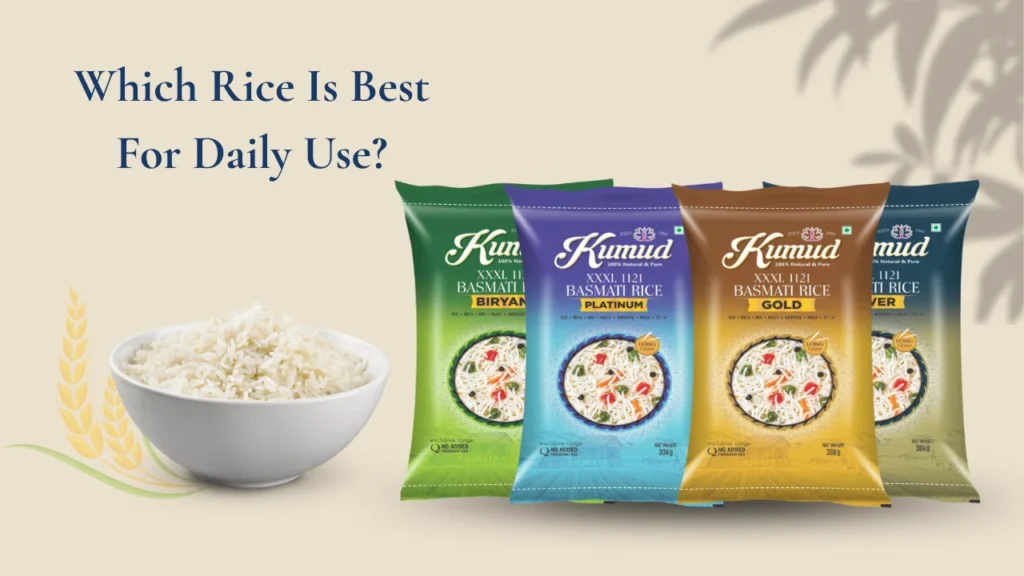
Walk into any grocery store and you will find rows of rice bags, each claiming to be the right choice. Basmati, Sona Masoori, Kolam, parboiled, brown rice, the list goes on. For most Indian households, rice is not a one-time buy. It is a daily staple, so picking the wrong one means living with that choice every single day.
So which rice is best for daily use? The answer depends on how you cook, what dishes you make most often, and how much you are willing to spend. This guide breaks down rice by texture, cooking time, region, and quality, so you can pick what actually works for your kitchen.
Popular Rice Varieties Eaten Daily Across India
Rice preference in India changes a lot depending on where you live, and this often decides which rice is best for a particular household. Regional cooking styles have shaped these choices over generations, and each variety fits naturally into local dishes.
- North India: Basmati and other long-grain varieties are common, especially for pulao, biryani, and everyday meals paired with dal.
- South India: Sona Masoori and parboiled or idli rice are kitchen staples, suited for rice, sambar, curd rice, and idli or dosa batter.
- West and Maharashtra: Kolam rice is widely used for daily meals because of its soft texture once cooked.
- East India: Gobindobhog and parboiled red rice are common, often used in traditional Bengali and Odia cooking.
There is no single answer to what counts as the best rice in India for daily use. It comes down to regional taste, the dishes cooked most often, and what the household has grown up eating.
What Makes Rice Suitable for Everyday Cooking
Not every rice works for every meal, and that is the first thing to understand before picking a bag for regular use. Grain texture matters most. Short and medium grain rice turns soft and slightly sticky once cooked, which is exactly what curd rice, khichdi, or a simple South Indian meal needs. Long grain rice, on the other hand, stays separate and fluffy, making it better suited for pulao or biryani.
Cooking time is another factor. Some varieties cook fast in a pressure cooker and fit into a quick weekday routine, while others need slow simmering for the right texture. Good rice for daily use should also be versatile enough to pair with dal, sabzi, or curry without needing extra effort. Household size and how often rice is cooked also decide whether you need a budget-friendly bag or a smaller, premium pack for occasional use.
Quick Comparison: Texture, Cooking Time & Everyday Use
| Rice Type | Grain Texture | Cooking Time | Best Used For |
|---|---|---|---|
| Basmati | Long, fluffy, separate grains | 15-20 minutes | Pulao, biryani, everyday meals |
| Sona Masoori | Soft, slightly sticky | 15-18 minutes | Curd rice, plain rice, sambar rice |
| Kolam | Soft, sticky when cooked | 15-20 minutes | Everyday meals, khichdi |
| Parboiled | Firm, separate grains | 20-25 minutes | Idli, dosa batter, everyday cooking |
| Brown rice | Firm, chewy texture | 30-40 minutes | Pulao, mixed rice dishes |
Choosing Rice by Quality, Sourcing & Budget
Variety is only part of the decision. How the rice has been processed matters just as much. Aging, moisture control, and milling quality all affect how consistently the grain cooks, whether it holds its shape or turns mushy, and how long it stays fresh in storage. For daily use, budget matters too. A more affordable bag works fine for regular meals, while a premium option might be worth it for special dishes or festive cooking. There is no need to spend on premium rice every day if a mid-range option cooks well and suits your usual meals.
Before buying, especially in bulk, check the packaging for basic trust signals like FSSAI certification and milling or packing details. These small checks help ensure you are getting rice that is properly processed and safe for regular household consumption
Simple Storage & Cooking Tips for Daily Rice
Good rice can still turn out badly if storage and cooking habits are off. Store rice in an airtight container, away from moisture and direct sunlight, to keep it from clumping or attracting pests. When rinsing, go gentle. Over-washing or scrubbing the grains isn’t necessary and can affect the texture once cooked.
For anyone eating rice daily in India, one small habit helps: let cooked rice sit and cool for a few minutes before serving. This simple step improves texture and makes the grains less sticky, especially for varieties like basmati or long-grain rice.
Q1: Which rice is best to eat daily?
Ans: It depends on your cooking style and budget. Non-basmati varieties like Kolam or Sona Masoori suit softer daily meals, while basmati works for fragrant, everyday plates.
Q2: Which type of kolam rice is best?
Ans: Raw Kolam rice is commonly preferred for daily cooking since it holds a soft texture well, making it suitable for curd rice and simple home meals.
Q3: Which is better, Sona Masoori or kolam rice?
Ans: Both work well daily. Sona Masoori cooks slightly firmer, while Kolam turns softer and stickier, so the choice depends on the texture your meals need.
Q4: Which rice is better, sona masoori or basmati?
Ans: Sona Masoori suits daily, budget-friendly meals with a softer texture, while basmati offers aroma and long grains, better suited for fragrant or festive dishes.
Conclusion
The right rice depends on what you need. For aroma and fluffy, separate grains, basmati works best. For soft, sticky texture in curd rice or khichdi, Sona Masoori or Kolam are good picks. Parboiled rice suits idli and dosa batter well, while brown rice fits mixed rice dishes needing a firmer bite. There is no single best rice for daily use in India. It comes down to your cooking style, the dishes you make most, and your budget.