Rice is one of the most widely grown food crops in the world. It feeds more than half of the global population and belongs to the grass family.
There are thousands of cultivated rice varieties. Each one is suited to different soils, climates, and cooking styles. Before rice reaches your plate, it exists as paddy. Paddy is the unhusked form of the grain, still covered by its outer husk. Once milled, paddy becomes the rice we eat.
Understanding the different types of rice, from how they grow to how they are processed, helps you pick the right variety. This applies whether you are cooking at home or sourcing rice for export.
Classification by Grain Length
One of the most common ways to sort rice is by grain size. This classification of rice divides varieties into three categories: long grain, short grain, and medium grain. Long grain rice means the grain length is about four to five times its width. It cooks up light and fluffy, with grains that stay separate. This happens because long grain rice has a higher amylose content, a type of starch that resists sticking.
Medium grain rice is shorter and plumper. It has a balanced starch content, so it turns out tender with a slight chew, neither fully fluffy nor fully sticky. Short grain rice is almost round in shape. It contains more amylopectin, another starch type that makes the grains cling together after cooking.
Most Indian rice, including Basmati, falls under the indica rice category. Indica varieties are typically long grain and grow well in warm, tropical climates like India’s. When it comes to grains of rice size, Basmati stands out. Pusa Basmati 1121 is known as the longest basmati rice variety available, with grains that elongate further after cooking. It is often considered among the longest rice in India.
| Grain Type | Length | Texture After Cooking |
|---|---|---|
| Long Grain | 4-5x width | Fluffy, separate |
| Medium Grain | 2-3x width | Tender, slightly sticky |
| Short Grain | Nearly round | Soft, clumps together |
Classification by Processing Method
Rice is also classified by how it is processed after harvest. The structure of rice includes four main rice components: the husk, bran, germ, and endosperm. Milling removes some or all of these layers, and this determines the final type of rice. Brown rice keeps its bran layer intact. Only the outer husk is removed. This gives it a chewy texture and a nutty taste, along with more fiber than white rice.
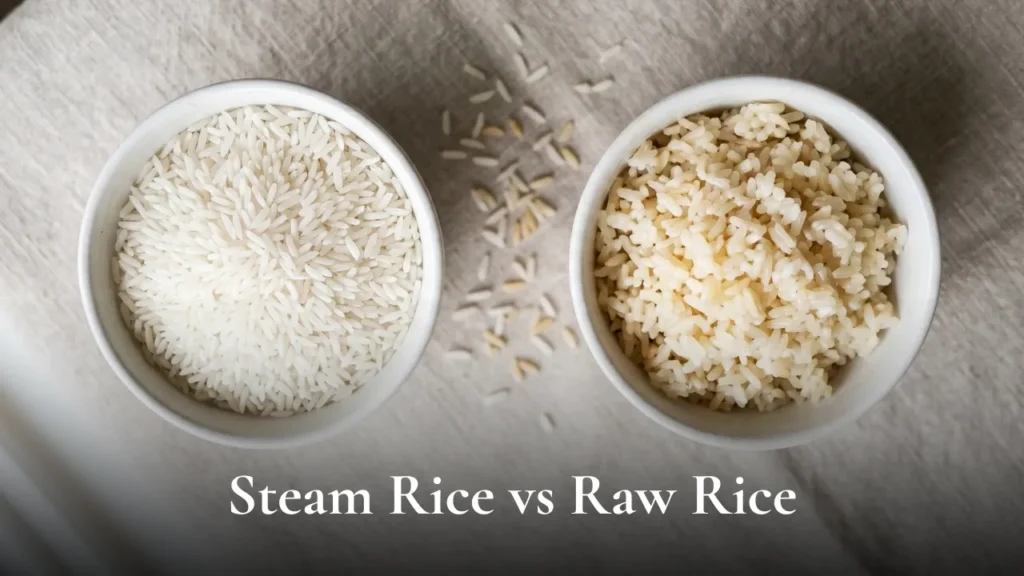
White rice goes through further milling. The bran and germ are removed, leaving just the endosperm. This is the most common of all the different types of white rice sold in the market. It cooks faster and has a softer texture. Parboiled rice, also called steamed rice, follows a different path. The paddy is soaked, steamed, and dried before milling. This pushes nutrients from the bran into the grain and gives the rice a firmer bite after cooking.
Among the types of cooked rice, parboiled grains tend to stay more separate, while white rice can turn softer and stickier depending on the variety.
| Type | Processing | Texture |
|---|---|---|
| Brown Rice | Husk removed, bran retained | Chewy, nutty |
| White Rice | Bran and germ removed | Soft, mild |
| Parboiled Rice | Steamed before milling | Firm, separate grains |
Basmati vs Non-Basmati: India’s Core Rice Divide
In India, rice is broadly split into two categories: Basmati and non-Basmati. This is one of the most important ways to understand rice varieties in the country. Basmati rice is a type of long grain rice, but not every long grain rice is Basmati. The basmati rice vs long grain rice comparison comes down to aroma and aging. Basmati carries a natural fragrance and grows longer after cooking, a trait most regular long grain rice does not have.
Non-Basmati rice covers a wider range of everyday, popular rice varieties. These are grown across different regions of India and are used mainly for daily meals rather than special occasions. They lack Basmati’s aroma but are valued for affordability and versatility.
Popular Basmati Rice Varieties
India grows several types of Basmati rice, each with its own grain length and cooking quality. Here is a basmati rice name list worth knowing.
1121 Basmati Rice
This is the most widely exported variety. It has an extra-long grain that elongates significantly after cooking, making it a top choice for biryani and pulao.
1509 Basmati Rice
A faster-maturing variety with good aroma and cooking quality. It is slightly shorter than 1121 but still delivers a fluffy, separate texture.
1401 Basmati Rice
Known for its slender grain and consistent elongation. It is a reliable choice for both retail and bulk buyers.
1718 Basmati Rice
A newer hybrid variety with grain length close to 1121. It offers strong elongation and good aroma, and is gaining demand among exporters as an alternative to 1121.
Traditional and Pusa Basmati
Traditional Basmati is one of the oldest rice varieties in India, valued for its deep aroma, though the grain is shorter than modern hybrids. Pusa Basmati offers a balance of grain length and yield, making it a popular option among farmers and exporters alike.
Each variety differs in grain length, aroma, and texture. Explore our full range of basmati rice varieties to compare them in detail before placing your order.
Among these types of basmati rice, the choice often depends on grain length, aroma, and budget, which is why many consider 1121 the best rice variety in India for export purposes.
Popular Non-Basmati Rice Varieties in India
Beyond Basmati, India grows a wide range of non-Basmati rice varieties. This list of rice covers some of the most common Indian rice names used across households and export markets.
Sona Masoori
A medium grain rice grown mainly in Andhra Pradesh and Telangana. It is light, low in starch, and popular for daily South Indian meals.
PR11
A non-aromatic variety known for its yield and grain quality. It is commonly used in both domestic markets and bulk export.
PR14
Another popular variety from the PR series, valued for its grain uniformity and cooking consistency. It is widely grown alongside PR11 for both local and export demand.
RH10
A non-basmati variety known for its decent grain length and steady yield. It is often chosen for bulk trade due to its reliable quality.
Sharbati
Grown mainly in Madhya Pradesh, Sharbati has a soft texture and a mild sweetness. It is often compared to Basmati for its slender grain, though it lacks the same aroma.
Parmal (IR64)
One of the most widely grown and exported non-Basmati varieties in India. It has a neutral taste and consistent grain quality, making it a staple for everyday cooking.
India also grows red rice varieties, such as Matta rice from Kerala. These carry a reddish husk and are valued for their fiber content.
Among the different types of rice in India, these varieties’ names show how wide the range really is, from aromatic Basmati to everyday staples grown across regions.
Popular Rice Varieties by Region
Rice growing regions across India vary widely, and each region favors certain varieties based on climate and soil. Here is a quick snapshot covering some of the all types of rice grown across the country, listed under their common name of rice by region.
| Region | Popular Varieties |
|---|---|
| North India | Basmati, 1121, 1509, Sharbati |
| North IndiaEast India | Sona Masoori, Ponni |
| East India | Gobindobhog |
| West India | Kolam |
| Central India | Parmal, PR11, PR14 |
This regional spread is one reason India offers such a broad mix, easily covering 10 types of rice or more once you account for both Basmati and non-Basmati varieties across states.
FAQs
Q1: What are the 10 different types of rice?
Ans: Common types include Basmati, Sona Masoori, IR64, Sharbati, PR11, PR14, brown rice, white rice, parboiled rice, and red rice like Matta.
Q2: How many types of Indian rice are there?
Ans: India grows dozens of rice varieties across regions, split broadly into Basmati and non-Basmati categories, each with its own grain length and use.
Q3: Which is the no. 1 rice in India?
Ans: Basmati rice, especially the 1121 variety, is widely considered India’s top rice for its aroma, grain length, and strong export demand.
Q4: Which is the highest yielding variety of rice?
Ans: Among non-Basmati varieties, IR64 (Parmal) is known for its high yield, making it a preferred choice for large-scale cultivation and export.
Q5: What is IR 64 raw rice?
Ans :IR64 raw rice is an unprocessed, non-Basmati variety with neutral flavor and consistent grain quality, widely used for daily meals and export.