
Rice Export to Poland from India
Kumud Group has been milling and exporting rice from India since 1994, running two mills at Sandi Chungi, Hardoi, Uttar Pradesh, and Village Nariana, Taraori, Karnal, Haryana, both located in India’s GI-certified basmati belt. Over three decades, the company has grown into a supplier for 970+ clients across more than 30 countries in Asia, the Middle East, and Europe, built on a simple family rule: what we wouldn’t feed our own family, we won’t sell to yours.
Poland does not grow rice commercially, so nearly every grain sold there, from supermarket basmati to bulk parboiled rice used in food service, comes through import. That makes Poland a steady opportunity for Indian exporters who can meet EU documentation standards and deliver consistent quality shipment after shipment. This page covers what Polish importers need to know before placing an order with Kumud Group.
1994
Milling Since
30+
Countries Served
1000+
Satisfied Clients
2
Rice Mills
EU-Wide Food Safety Rules Apply in Poland
As an EU member state, Poland follows the bloc’s harmonised food safety framework rather than a separate national rulebook. Pesticide residue limits are set by the European Food Safety Authority (EFSA), and any rice shipment entering Poland is expected to stay within those Maximum Residue Levels. This is one reason buyers increasingly ask for Pesticide Residue Free rice, which Kumud Group supplies alongside its regular basmati and non-basmati range.
Basmati Authenticity Certificate
Rice sold as “basmati” in Poland and the rest of the EU is covered by specific EU rules on basmati imports (Commission Regulation 972/2006, updated by Regulation 2023/2835). To qualify for preferential duty treatment, basmati shipments from India need an authenticity certificate issued by the Export Inspection Council of India, confirming the grain matches an EU-recognised basmati variety. Not every Indian rice variety marketed as basmati is on that recognised list, so buyers should confirm with Kumud Group which of its varieties (1121, 1401, 1509, 1718, Pusa, Traditional) currently qualify before finalising an order.
Phytosanitary Certificate and PIORIN Inspection
Every consignment of rice, being a plant product, needs a phytosanitary certificate issued in India before it can enter the EU. On arrival in Poland, shipments are subject to checks by the State Plant Health and Seed Inspection Service, known locally as PIORIN, which verifies the goods against EU plant health rules before releasing them into the market.
Our Certifications



Popular Rice Varieties for the Polish Market
1121 Basmati Rice
Long grain, known for its length after cooking, a common choice for bulk food service buyers.
1509 Basmati Rice
Shorter cooking time than traditional basmati, popular with importers who want faster turnaround.
Traditional Basmati Rice
Aged basmati with a stronger aroma, used by buyers who want a premium grade.
Pusa Basmati Rice
A widely grown basmati variety, used across retail and food service.
Pesticide Residue Free Rice
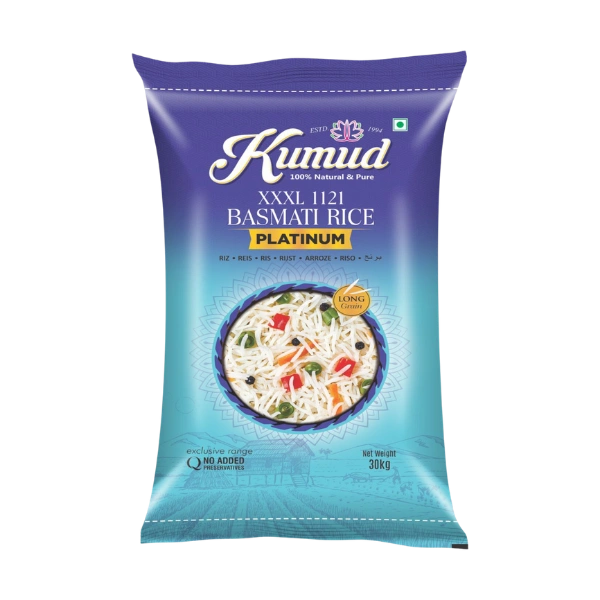
For Poland with stricter food safety requirements, we also supply Pesticide Residue Free rice across select basmati varieties. This is tested for pesticide residue limits before it leaves our mill.
Note: Non basmati rice from our range, including PR11, PR14 and Parmal can also be supplied to Poland on request.
Packaging and Shipping to Poland
Packaging Options
Kumud Group packs rice from 500g retail pouches up to 50kg bulk bags, adjusted to what the buyer needs. Private label packaging is available for importers who want to sell under their own Polish brand rather than the Kumud name.
Shipping and Logistics
Rice shipments to Poland typically move by sea to the ports of Gdansk or Gdynia, Poland’s main entry points for containerised food imports, before onward road or rail transport to the buyer’s warehouse. The exact Indian port of origin for Kumud Group shipments (such as Mundra or Nhava Sheva) is to be confirmed with the client so this section can name it accurately.
FAQs
Q1: Does Kumud Group's basmati rice qualify for EU preferential duty rates in Poland?
Ans: Some Kumud Group basmati varieties fall under the EU’s recognised basmati list and can qualify with a valid authenticity certificate. Buyers should confirm the current status of the specific variety they need, since the approved list is updated periodically.
Q2: Can Kumud Group supply under a private Polish brand name?
Ans: Yes. Private label packaging is available, letting Polish importers sell Kumud Group rice under their own brand across retail or foodservice channels.