Rice is a staple food, but not every variety affects blood sugar the same way. This is where the basmati rice glycemic index becomes important. Some rice types spike blood sugar fast, while others release energy slowly. Basmati rice has a relatively lower glycemic index (GI) than many other rice varieties, which can make it a suitable choice for people looking for a slower rise in blood sugar. If you’re exploring healthier options, our basmati rice range offers naturally processed varieties suited for everyday consumption. This article explores the basmati rice GI, the factors that affect it, how processing changes its GI, and what it means for people with diabetes and everyday rice consumption.
What Is the Glycemic Index of Basmati Rice?
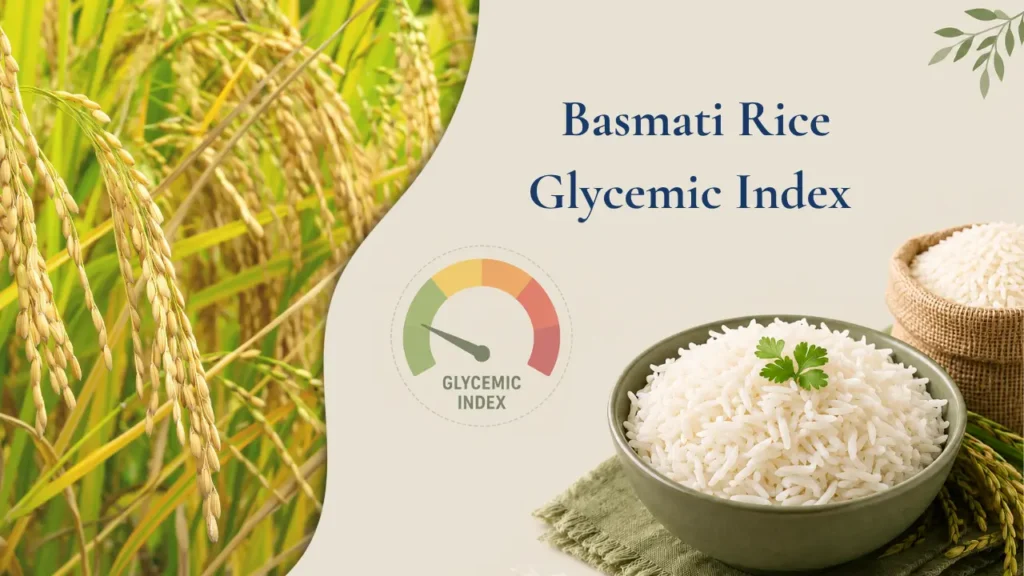
The glycemic index of rice measures how fast a food raises blood sugar after eating. Foods are grouped into three categories: low GI (55 or below), medium GI (56 to 69), and high GI (70 and above).
Studies place basmati rice in the low to moderate range, generally between 50 and 58. This puts it below most standard white rice varieties, which often cross into the high GI zone. The white basmati rice glycemic index stays lower mainly because of its higher amylose content. Amylose is a starch type that digests more slowly than the starch found in regular white rice, which leads to a gentler rise in blood sugar.
Does Processing Affect Basmati Rice GI? (Raw vs Parboiled Basmati)
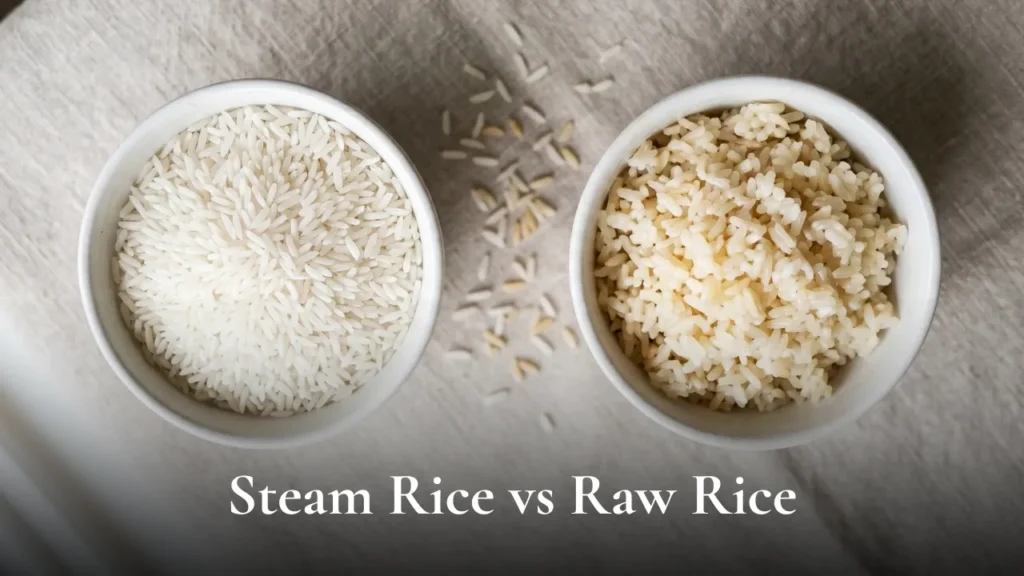
The way basmati rice is processed changes its glycemic response. Parboiled rice glycemic index is often lower than that of raw or fully milled rice, because the parboiling process changes the starch structure before milling.
During parboiling, rice is soaked, steamed, and then dried before husking. This heat treatment causes some starch to form a more resistant structure, which slows down digestion. Raw basmati, which skips this steaming step, digests a bit faster in comparison.
A multi centric clinical study conducted on Indian basmati rice supports this pattern. It measured blood glucose response in healthy volunteers using standard testing protocols and found that a thermally treated basmati sample produced a lower glucose peak than the reference food, placing it in the low GI category.
Basmati Rice vs Brown Rice: How Do They Compare?
When comparing basmati rice vs brown rice, brown rice usually sits a little lower on the GI scale, around 50. This happens because its bran layer stays intact, which slows down digestion further. Basmati rice, with a GI closer to 58, is still a reasonable choice. The gap between the two is small. For most people, both work well as part of a balanced meal, so the choice can come down to taste and texture preference.
Is Basmati Rice Good for Diabetics and Daily Consumption?
Basmati rice generally has a lower GI than many other rice varieties, which may make it a suitable option for people managing blood sugar. A lower glycemic index means the carbohydrates in food are digested and absorbed more slowly, which may help reduce sharp rises in blood glucose. However, portion size still matters. Even a low GI food can affect blood sugar if eaten in large quantities. So, can we eat basmati rice daily? For many people, it can be included in moderate portions as part of a balanced diet. Anyone managing diabetes should consult a doctor for guidance suited to their needs.
Basmati Rice Nutrition (Per 100g)
Basmati rice values differ depending on whether it is measured raw or after cooking, since cooking adds water weight and lowers the concentration of nutrients per 100 grams.
| Nutrient | Raw (per 100g) | Cooked (per 100g) |
|---|---|---|
| Calories | 350 – 360 kcal | 121 – 130 kcal |
| Carbohydrates | 75 – 78 g | 25 – 28 g |
| Protein | 7 – 9 g | 3 – 4 g |
| Fat | 0.5 g | 0.3 g |
This makes it a carbohydrate dense food with a modest protein contribution.
The basmati rice nutrition facts 100g profile, combined with its lower GI, means it digests more gradually compared to regular white rice. This steady release can help avoid the quick hunger pangs that often follow high GI meals.
FAQs
Q1: Does basmati rice raise blood sugar?
Ans: Basmati rice can raise blood sugar, but its low GI means the rise is slower and steadier than high GI rice varieties like jasmine rice.
Q2: Is basmati rice ok for diabetes?
Ans: Basmati rice’s low GI makes it a reasonable option for diabetics in moderate portions, though a doctor should be consulted for personalized dietary guidance.
Q3: Which is better for a diabetic, basmati or jasmine rice?
Ans: Basmati rice is generally better, since its GI of around 50 to 58 is much lower than jasmine rice, which has a high GI.
Q4: Which type of rice has the best low glycemic index?
Ans: Among common rice types, parboiled and brown rice tend to have the lowest GI, with basmati rice also falling in the low range.
Q5: Is sona masoori rice low glycemic?
Ans: Sona masoori rice generally has a higher GI than basmati rice. Being a lighter, more polished grain, it is usually not classified as low GI.