Walk into any rice market in India and you will find the same variety listed twice: once as raw, once as steam. Same crop, same grain, two different products. Most people assume the difference is simply about how the rice is cooked at home. It is not.
Steam rice and raw rice begin their journey in the same paddy field but diverge completely at the processing mill. That single difference in processing changes everything: appearance, aroma, texture, shelf life, nutritional value, and how each performs in the kitchen.
This article breaks down exactly what separates the two, variety by variety, fact by fact.
Raw Rice: Straight from Paddy to Mill
Raw rice is exactly what the name suggests, rice that goes from paddy to mill without any heat or steam treatment in between.
After harvesting, the paddy is dried and sent directly to the milling unit. There, the outer husk is removed, the bran layer is polished off, and the grain is sorted and packed. No soaking, no steaming, no pre-cooking of any kind. The natural grain structure remains completely intact throughout the entire process.
The result is a bright white, opaque grain that retains the variety’s original aroma and cooks to a softer, slightly moist texture.
Raw rice is available across both Basmati and non-Basmati varieties from traditional Basmati and Sharbati to Sona Masoori, IR 64, and PR11. It is the most widely consumed form of rice in South Indian households and remains the dominant choice for fermented preparations like idli and dosa batter.
What Is Steam Rice?
How Heat Changes the Grain Before Milling
Steam rice is paddy that undergoes a controlled heat treatment like soaking, steaming, and drying before it ever reaches the milling stage.
The process works in sequence. First, the unhusked paddy is soaked in water. It is then steamed under pressure, which drives moisture deep into the grain and triggers changes inside the kernel. After steaming, the paddy is dried down to a safe moisture level and only then sent for milling husk removal, bran polishing, and sorting.
This hydrothermal treatment fundamentally alters the grain’s structure before milling even begins. The starch partially gelatinizes, the grain hardens, and the final milled rice comes out slightly golden or translucent rather than bright white.
Steam rice is widely available in both Basmati and non-Basmati varieties. Its firmer texture, longer shelf life, and higher nutrient retention make it the preferred processing form for export markets and large-scale distribution.
Steam Rice, Parboiled Rice, Boiled Rice. Are They the Same Thing?
Yes and this is one of the most common points of confusion in the rice market.
Steam rice, parboiled rice, and boiled rice are not three different products. There are three different names for the same processing category rice that undergoes hydrothermal treatment before milling. The terminology simply changes depending on where you are:
- India: commonly called steam rice.
- International trade and export markets: called parboiled rice.
- South Indian markets: often referred to as boiled rice.
All three involve the same fundamental process: soaking, steaming under pressure, drying, and then milling.
This matters because buyers and consumers frequently assume these are distinct varieties. They are not. If a supplier offers parboiled rice and another offers steam rice, they are describing the same product.
What Happens During the Steaming Process?
Most people know that steam rice is “treated before milling” but very few understand what actually happens inside the grain during that treatment. This is where the real difference between steam rice and raw rice begins.
The process moves through four distinct stages:
- Soaking: Unhusked paddy is submerged in water. Moisture slowly penetrates through the husk and begins entering the grain.
- Steaming under pressure: The soaked paddy is exposed to controlled steam. Heat and pressure drive moisture deeper into the grain, reaching the endosperm at the core.
- Nutrient migration: As moisture moves inward, it carries vitamins and minerals from the bran layer into the endosperm. This is the key reason steam rice retains more nutrients even after the bran is removed during milling.
- Starch gelatinization and grain hardening: The heat causes the starch inside the grain to partially gelatinize. The grain hardens significantly which is why steam rice holds its shape during cooking and resists becoming mushy.
- Drying: The paddy is dried to reduce moisture back to safe levels before milling begins.
The golden color of steam rice is also a result of this process: pigments from the bran transfer into the grain during pressure steaming, leaving a permanent golden or off-white tint even after polishing.
Steam Rice vs Raw Rice: Side-by-Side Comparison
Both originate from the same paddy but by the time they reach your kitchen, they are meaningfully different products. Here is a clear comparison across the parameters that matter most:
| Feature | Raw Rice | Steam Rice |
|---|---|---|
| Processing | Direct milling, no pre-treatment | Soaked, steamed, dried, then milled |
| Appearance | Bright white, opaque | Slightly golden or translucent |
| Texture after cooking | Soft, slightly moist | Firm, separate grains |
| Aroma | Stronger natural aroma | Milder, slightly altered aroma |
| Cooking time | Faster | Slightly longer |
| Grain separation | Moderate | High |
| Shelf life | 9–12 months | 18–24 months |
| Nutrient retention | Moderate | Higher |
One important note: neither is universally superior. The right choice depends entirely on what you are cooking and what your dietary priorities are.
Appearance, Aroma, and Texture: How to Tell Them Apart
Telling raw rice and steam rice apart is straightforward once you know what to look for; the differences are visible, smellable, and felt on the plate.
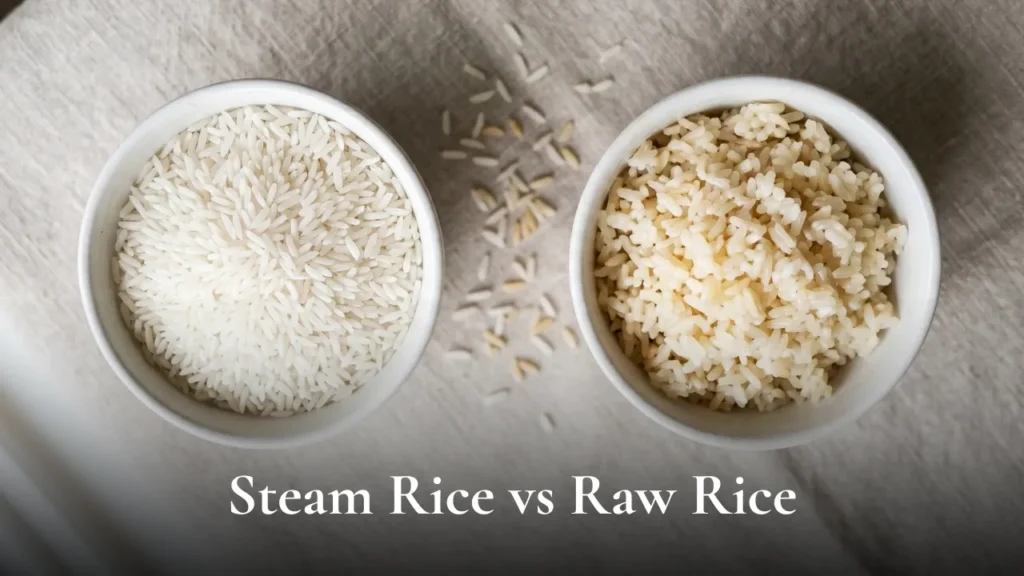
- Appearance is the easiest giveaway. Raw rice is bright white and opaque, the natural color of a polished, untreated grain. Steam rice carries a slightly golden or off-white tint, a permanent result of bran pigments transferring into the grain during pressure steaming. No amount of washing removes it.
- Aroma is more subtle but real. Raw rice retains the variety’s natural fragrance more fully. Steam rice has a milder, slightly different scent; the hydrothermal process alters some of the grain’s volatile aromatic compounds during steaming.
- Texture is where the difference is most noticeable after cooking. Steam rice comes out firm, with grains that separate cleanly from each other. Raw rice cooks softer and can be slightly cohesive, a quality that is actually desirable in many traditional dishes.
The golden color of steam rice is also a result of this process: pigments from the bran transfer into the grain during pressure steaming, leaving a permanent golden or off-white tint even after polishing.
Nutritional Comparison: Raw Rice vs Steam Rice
One important clarification before comparing. Most tables online show raw rice at 370 kcal versus steam rice at 130 kcal making steam rice appear far healthier. This is misleading. It compares dry uncooked raw rice against already-cooked steam rice. When both are compared cooked, the calorie and carbohydrate values are nearly identical.
The real differences lie in nutrient retention and dietary fiber:
- B Vitamins: Steam rice retains significantly more B1, B3, and B6 nutrients that migrate from the bran into the grain during pressure steaming, before the bran is removed at milling.
- Mineral absorption: Steam rice offers better mineral bioavailability due to reduced antinutrient levels after heat treatment.
- Dietary fiber and resistant starch: Raw rice contains slightly more resistant starch, which supports digestive health in its own way.
Neither variety is universally healthier. Steam rice suits those prioritizing vitamins and easier digestion. Raw rice suits those who prefer natural grain composition and traditional cooking methods.
Why Are Rice Varieties Available in Both Raw and Steam Forms?
Many buyers notice that the same rice variety appears twice on a supplier’s list once as raw, once as steam. This is not a duplication. It reflects a deliberate reality of the rice processing industry.
The same paddy crop is routed through two different processing lines to produce two distinct products for two different markets. Common examples include:
- 1121 Basmati Raw and 1121 Basmati Steam.
- Sharbati Raw and Sharbati Steam.
- Sugandha Raw and Sugandha Steam.
- PR11 Raw and PR11 Steam.
The grain origin is identical, the processing route is not.
This exists because consumer preferences vary significantly by region and use case. South Indian households and traditional cooks prefer raw. Export markets across the Middle East and Africa predominantly demand steam. Restaurants and commercial kitchens often specify steam for its shelf life and grain separation.
Rice mills process the same harvest both ways to serve both markets simultaneously.
Sona Masoori Steam Rice vs Raw Rice
Sona Masoori is a medium-grain non-Basmati rice from Andhra Pradesh and Telangana. It is one of the most popular everyday rice varieties in South Indian homes.
- Raw Sona Masoori: Softer texture, slightly cohesive after cooking, faster to prepare. The preferred choice for everyday South Indian meals is rice and dal, curd rice, and traditional home cooking.
- Steam Sona Masoori: Firmer grain, better shelf life, slightly less sticky after cooking. Preferred by exporters, retail brands, and diaspora communities who need longer storage without compromising on the variety’s characteristic lightness.
Both forms carry the same lightweight, easy-to-digest quality that makes Sona Masoori a staple in millions of Indian households.
Steam Rice, Raw Rice, and Sella Rice: What Is the Difference?
Many people get confused between raw rice, steam rice, and sella rice — especially when buying Basmati. These are three different products, and the difference comes down to how each one is processed.
Here is a simple breakdown:
| Type | Processing | Appearance | Texture When Cooked |
|---|---|---|---|
| Raw Rice | Direct milling, no treatment | Bright white | Soft, slightly sticky |
| Steam Rice | Soaked, steamed, dried, then milled | Light golden | Firm, grains separate |
| White Sella Rice | Husked first, then parboiled, then milled white | Creamy white | Very firm, very separate |
| Golden Sella Rice | Parboiled with husk still on, then milled | Deep golden | Firmest, completely separate |
The key difference between steam rice and sella rice is the intensity of processing. Sella rice goes through a longer, stronger parboiling which makes the grain much firmer than regular steam rice.
Conclusion
Steam rice and raw rice start the same way as paddy in a field. One goes straight to the mill. The other is soaked, steamed, and dried first. That single difference changes everything about how they look, how they cook, how long they last, and what nutrients they carry. Neither is better than the other. The right choice depends on what you are cooking and what your body needs.