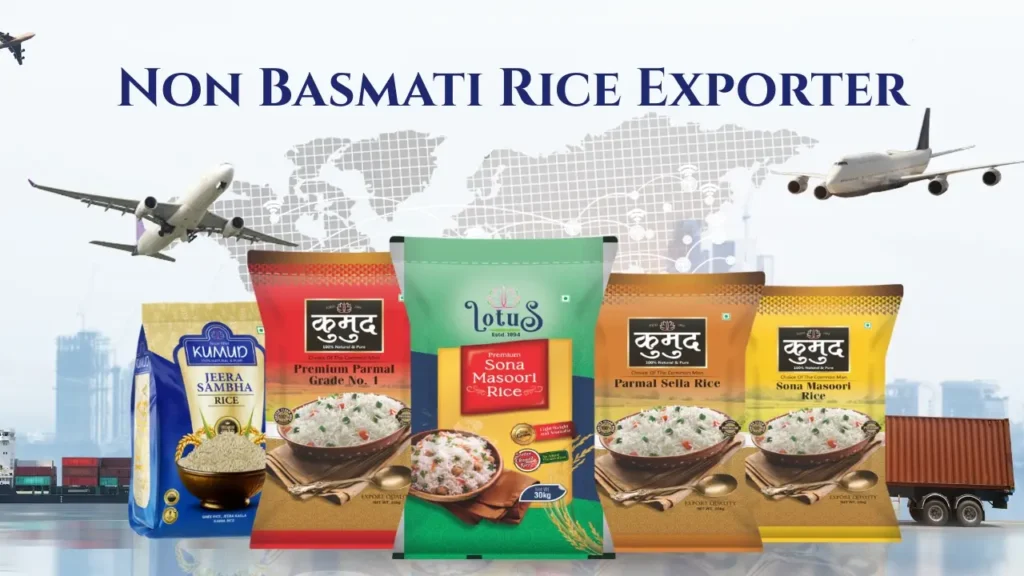
India holds a leading position among the world’s rice exporting countries, supplying both basmati and non-basmati varieties to buyers across the globe. Among these, non basmati rice exports form a major part of the country’s agricultural trade, supported by large production volumes and consistent quality standards.
Non-basmati rice includes varieties like parboiled rice, white rice, and broken rice, all of which are widely used in everyday cooking across many countries. Buyers from Africa, the Middle East, and Southeast Asia regularly source this rice due to its affordability and steady supply.
For importers, understanding the right varieties, quality standards, and sourcing practices makes a real difference in building a reliable supply chain.
Understanding Non Basmati Rice and Its Role in India’s Rice Industry
Non basmati rice includes all rice varieties grown in India that do not belong to the aromatic basmati family. These rice types are valued for their versatility, affordability, and suitability for daily cooking across many cuisines.
Among rice exporting countries, India stands out because of the sheer diversity of non basmati rice varieties in India. Each variety serves different culinary needs, which is why demand remains steady across continents.
Major Non Basmati Rice Varieties in India
Some of the most widely traded varieties include:
- IR-64 – A medium-grain rice known for its versatility and mild flavor, used in everyday cooking.
- Sona Masoori – A lighter, aromatic rice popular in South Indian dishes.
- Ponni Rice – Known for its soft texture, often used in idlis and dosas.
- Swarna Rice – A high-yield variety commonly used for bulk consumption.
- Parboiled Rice – Processed for longer shelf life and better resistance to pests during shipping.
These varieties form the backbone of non basmati rice exporters’ product range, allowing them to serve different markets with the right grain type.
Rice Specifications and Quality Parameters Buyers Look For
Quality is one of the most important factors for any buyer sourcing rice internationally. Before finalising an order, most importers check a few key specifications to make sure the product meets their requirements.
Here are the main parameters used to judge non-basmati rice quality:
- Broken percentage – Indicates how much of the rice is broken grains versus whole grains. Lower broken percentage usually means higher quality.
- Moisture content – Ideally kept between 12% to 14%. Lower moisture helps prevent spoilage during long shipments.
- Foreign matter – The amount of husk, stones, or other impurities mixed in the rice. Good quality rice keeps this to a minimum.
- Grain length and uniformity – Buyers often prefer consistent grain size, as it affects both appearance and cooking results.
- Milling degree – Refers to how well the bran layer has been removed. This affects the rice’s colour, texture, and cooking time.
Why Quality Consistency Matters
Buyers sourcing rice in India for repeat orders pay close attention to consistency across shipments. A trusted exporter maintains the same quality standards batch after batch, which builds long-term buyer confidence and reduces sourcing risk.
Documentation Required for Non Basmati Rice Export
Proper documentation is essential for a smooth export process. Here are the key documents typically involved in non-basmati rice export:
- Import Export Code (IEC) – Required for any business involved in export activities.
- FSSAI registration – Mandatory for businesses dealing with food products, including rice.
- APEDA registration – Needed for exporting agricultural and processed food products.
- Certificate of Origin – Confirms that the rice was grown and processed in India.
- Phytosanitary certificate – Certifies that the shipment meets plant health standards required by the importing country.
- Commercial invoice and packing list – Details the shipment value, quantity, and packaging information for customs clearance.
Working with an experienced exporter means these documents are handled correctly and on time, reducing the chances of delays at the port.
What to Look for in a Reliable Non Basmati Rice Exporter
Choosing the right exporter matters just as much as choosing the right rice variety. A dependable exporter brings consistency, transparency, and smoother logistics to every order, which directly affects how smoothly a buyer’s supply chain runs.
Experienced buyers usually look for exporters who maintain the same quality specifications across every batch, so there are no surprises during inspection or after delivery. Proper documentation is equally important, since accurate paperwork around IEC, FSSAI, and APEDA registration helps avoid unnecessary delays at customs.
Flexibility also plays a role. Exporters who can support both bulk shipments and smaller trial orders make it easier for new buyers to test quality before committing to larger volumes. Clear communication throughout the process, from packaging details to shipping timelines, further builds confidence between both sides.
Ultimately, a strong sourcing network with direct access to farmers and mills tends to result in better consistency and more competitive pricing — making trusted non basmati rice exporters a safer long-term choice for buyers.
Global Demand Among Rice Exporting Countries
India remains one of the most preferred origins among rice exporting countries, largely due to its production scale and consistent supply throughout the year. While several countries export rice globally, few can match India’s combination of variety, volume, and pricing flexibility.
Non-basmati rice from India sees steady demand across several key regions:
- Africa – Serves as a staple food item for millions of households, with consistent year-round demand.
- Middle East – Used widely across both retail markets and food service businesses.
- Southeast Asia – Imported to support local consumption needs alongside domestic rice production.
This consistent international demand has encouraged Indian exporters to strengthen their processing, packaging, and shipping capabilities over time. As a result, buyers across these regions continue to view India as a stable and trustworthy source for their rice import requirements.
Conclusion
Non basmati rice exports continue to play a vital role in India’s agricultural trade, supported by diverse varieties, consistent quality, and a strong production base. For buyers, understanding grain types, quality parameters, and documentation requirements makes it easier to choose the right rice and the right exporter.
As global demand keeps growing, India’s position among leading rice exporting countries remains steady, offering buyers a reliable and scalable sourcing option for their long-term requirements.
FAQs
Q1: What is non-basmati rice called?
Ans: Non-basmati rice is simply the term used for any rice variety that does not belong to the basmati family. It includes varieties like IR64, Sona Masoori, Swarna, and Ponni, each known by its own regional name.
Q2: What are the main classifications of rice?
Ans: Rice is generally classified by grain length (long, medium, short), grain type (basmati and non-basmati), and processing method (raw or parboiled). These classifications help buyers choose rice suited to their cooking and packaging needs.
Q3: What is the difference between basmati and non-basmati rice?
Ans: Basmati rice is aromatic, long-grain, and known for its distinct fragrance, while non-basmati rice covers a wider range of varieties without that signature aroma. Non-basmati rice is widely used for daily cooking due to its affordability and versatility.
Q4: What is a good substitute for basmati rice?
Ans: Varieties like Sona Masoori, IR64, and Swarna are commonly used as substitutes for basmati rice in regular cooking, offering similar texture at a more affordable price point.
Q5: What are the different types of rice exported from India?
Ans: India exports several types of rice, including basmati rice and various non-basmati varieties such as parboiled rice, white rice, and broken rice. Each type serves different culinary and commercial needs across markets.
Q6: Which non-basmati rice varieties can be exported from India?
Ans: India exports a wide range of non-basmati rice varieties, including IR64, Sona Masoori, Swarna, Ponni, and Miniket, depending on buyer requirements and regional availability.
Q7: How is non-basmati rice exported from India?
Ans: Non-basmati rice export involves sourcing quality rice, completing lab testing, preparing required documents like IEC and APEDA registration, and arranging proper packaging and shipping for international buyers.