Looking for the best basmati rice for daily use? The right variety can make everyday cooking easier, healthier, and more budget-friendly. Some basmati types are grown for their long grains and strong aroma, ideal for special occasions like biryani, while others are better suited for daily meals due to their price, cooking ease, and mild flavor.
The right choice depends on a few simple factors: how it cooks, how it tastes with regular meals, and how well it fits your budget. This guide breaks down what to look for, which varieties work best, and how to pick a reliable brand for your kitchen.
What Makes a Basmati Rice Good for Daily Use?
Choosing basmati rice for everyday meals is different from picking rice for special occasions. Here is what actually matters for daily cooking:
- Budget-Friendly Price: Daily-use rice should be reasonably priced since it is consumed regularly, not just on special days. Premium long-grain varieties often cost more without adding much value to routine meals.
- Shorter Cooking Time: Rice that cooks faster saves time and fuel, especially for households cooking multiple times a day. Shorter grains and lightly aged rice usually cook quicker than heavily aged, extra-long varieties.
- Mild Aroma: A subtle, mild fragrance works better for daily meals than a strong, overpowering aroma, which can feel heavy when eaten frequently.
- Non-Sticky Texture: Grains that stay separate after cooking make the rice easier to pair with dal, curry, or vegetables, which is how most households eat rice daily.
Best Basmati Rice for Daily Use: Top Variety Picks
When it comes to picking the best basmati rice for daily use, a few varieties stand out for their balance of price, cooking ease, and everyday taste. These are not the premium extra-long grain types meant for biryani, but the ones that work well for regular meals like plain rice, khichdi, or pulao. Below is a quick comparison of three reliable options for daily cooking.
| Variety | Grain Length | Aroma Level | Best For |
|---|---|---|---|
| Sharbati | Medium | Mild | Everyday plain rice and simple meals |
| Pusa | Medium-Long | Mild to Moderate | Daily cooking and light pulao |
| 1401 | Long | Mild | Budget-friendly daily use and bulk cooking |
These varieties are widely used in Indian households because they cook evenly, do not require heavy soaking time, and pair well with everyday dishes without dominating the flavor. For a detailed breakdown of every Basmati variety including 1121, 1509, 1401, and Traditional, check our complete Basmati Rice Varieties Guide.
How to Identify a Good Basmati Rice Brand for Daily Use
Not every basmati rice brand is built for everyday cooking. Some are made for premium occasions, while others are designed specifically for daily household use. Here’s what to look for:
- Grain Uniformity: Grains should be consistent in size and length. Uneven grains often mean lower milling quality.
- Aging Process: Even daily-use rice benefits from short-term aging, which improves texture and reduces stickiness after cooking.
- Certification & Purity: Look for FSSAI-certified, unpolished or minimally polished rice free from artificial whitening.
- Packaging Transparency: Clear labeling of variety, grain length, and harvest details indicates a trustworthy brand.
- Price-to-Quality Ratio: Daily-use rice should offer consistent cooking results without paying a premium reserved for biryani-grade grains.
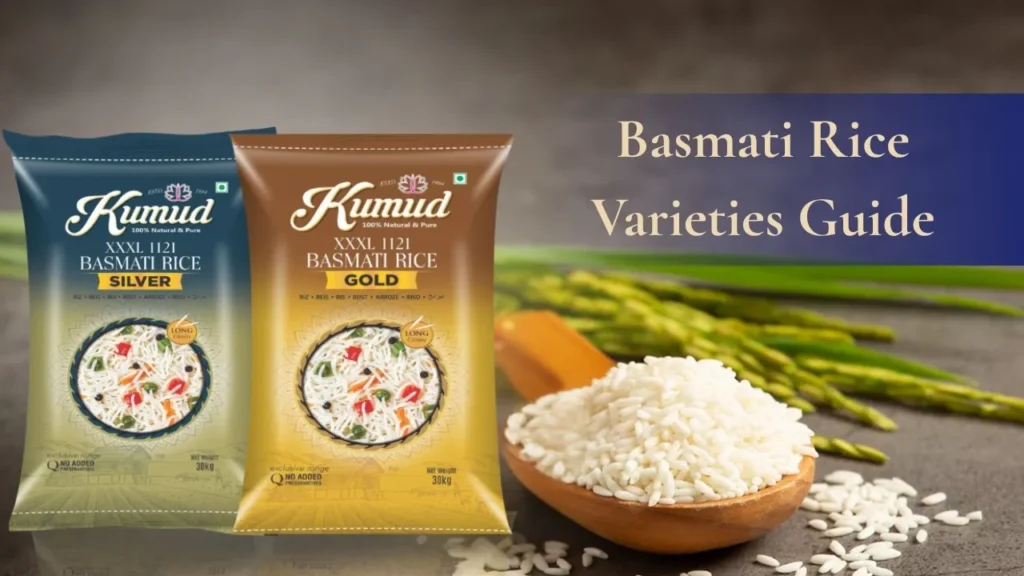
At Kumud Group, our SILVER grade under the KUMUD XXXL 1121 range is specifically crafted for this, offering the perfect balance of quality and affordability for everyday cooking. Explore our complete range of rice varieties on our Our Brand page.
Is Basmati Rice Healthy for Daily Consumption?
Basmati rice is generally considered a healthier choice for daily consumption compared to regular white rice. It has a lower glycemic index, which means it releases energy more gradually into the bloodstream.
This is mainly because basmati grains contain a higher proportion of amylose, a type of starch that digests slower than the starch found in short-grain white rice. Basmati rice also contains small amounts of fiber, along with essential minerals like magnesium and manganese, especially when it is less processed.
Brown or minimally polished basmati retains more of its natural bran layer, offering slightly more nutrition than heavily polished white basmati. Eaten in moderate portions as part of a balanced diet, basmati rice fits well into regular meals without major nutritional concerns.
Is Basmati Rice Good for Diabetics and Blood Pressure?
Basmati rice is often compared favorably to other rice types when it comes to blood sugar and heart health. Its lower glycemic index means it does not spike blood sugar levels as quickly as regular white rice or jasmine rice. For blood pressure, basmati rice is naturally low in sodium and fat, making it a neutral addition to most heart-conscious diets. However, portion size and preparation method matter just as much as the rice variety itself.
A few general points worth noting:
- Brown or unpolished basmati has a lower glycemic index than white basmati.
- Pairing basmati rice with fiber and protein-rich foods can slow sugar absorption further.
- Portion control remains important regardless of rice type.
Note: Individual dietary needs vary. Consult a doctor or dietitian for personalized advice.
Basmati vs Jasmine Rice: Which is Better for Daily Eating?
Basmati and jasmine rice are both popular long-grain varieties, but they differ in aroma, texture, and how they fit into daily meals. Here’s a quick comparison:
| Factor | Basmati Rice | Jasmine Rice |
|---|---|---|
| Aroma | Nutty, mild to strong | Floral, slightly sweet |
| Texture After Cooking | Separate, non-sticky grains | Soft, slightly sticky grains |
| Glycemic Index | Comparatively lower | Comparatively higher |
| Common Use | Pulao, khichdi, everyday meals | Stir-fries, Southeast Asian dishes |
| Grain Length | Long, slender | Medium to long |
For daily Indian meals, basmati rice is generally the better fit due to its non-sticky texture and lower glycemic index. Jasmine rice works well too, but its stickier texture suits different cuisines and cooking styles.
FAQs
Q1: Is basmati rice good for high blood pressure?
Ans: Basmati rice is naturally low in sodium and fat, making it a neutral choice for people managing blood pressure. It fits well into a balanced diet when eaten in moderate portions daily.
Q2: Is basmati rice good for type 2 diabetics?
Ans: Basmati rice has a lower glycemic index than regular white rice, so it affects blood sugar more gradually. It can be included in moderate portions, though individual response varies from person to person.
Q3: How much basmati rice can a diabetic eat daily?
Ans: There is no fixed amount that suits everyone, since portion size depends on individual health goals, activity level, and overall diet. A doctor or dietitian can suggest a suitable daily quantity.
Q4: Why does basmati rice not spike blood sugar much?
Ans: Basmati rice contains a higher proportion of amylose starch, which digests more slowly than starches in other rice types. This slower digestion leads to a gradual rise in blood sugar levels.
Q5: Is basmati rice good for IBS?
Ans: Basmati rice is generally easy to digest and lower in fiber compared to whole grains, which some people with IBS find gentler on the stomach. Individual tolerance still varies from person to person.
Q6: Which rice is best for kidney patients?
Ans: Rice choices for kidney health depend on individual dietary restrictions, including potassium and phosphorus intake levels. This should be decided with a doctor or renal dietitian, not a general rule.
Q7: Which rice is best to eat every day?
Ans: For daily meals, basmati rice is a popular choice due to its lower glycemic index, mild aroma, and non-sticky texture. It pairs well with dal, curry, and vegetables.
Q8: How do Asians eat so much rice but stay thin?
Ans: This pattern is often linked to overall diet habits, such as smaller portion sizes, more vegetables, and higher daily physical activity, rather than rice consumption alone driving the outcome.
Q9: How to bring A1C down naturally?
Ans: A1C levels are influenced by overall diet, physical activity, and other medical factors, not any single food. Lowering A1C naturally usually involves broader lifestyle changes. Consult a doctor first.
Conclusion
Picking the best basmati rice for daily use comes down to a few practical factors: budget, cooking time, mild aroma, and non-sticky texture. Varieties like Sharbati, Pusa, and 1401 work well for everyday meals without the premium cost of biryani-grade rice. Checking for grain uniformity, proper certification, and transparent packaging helps you choose a reliable brand. With the right variety, basmati rice can be a simple, healthy addition to daily cooking.